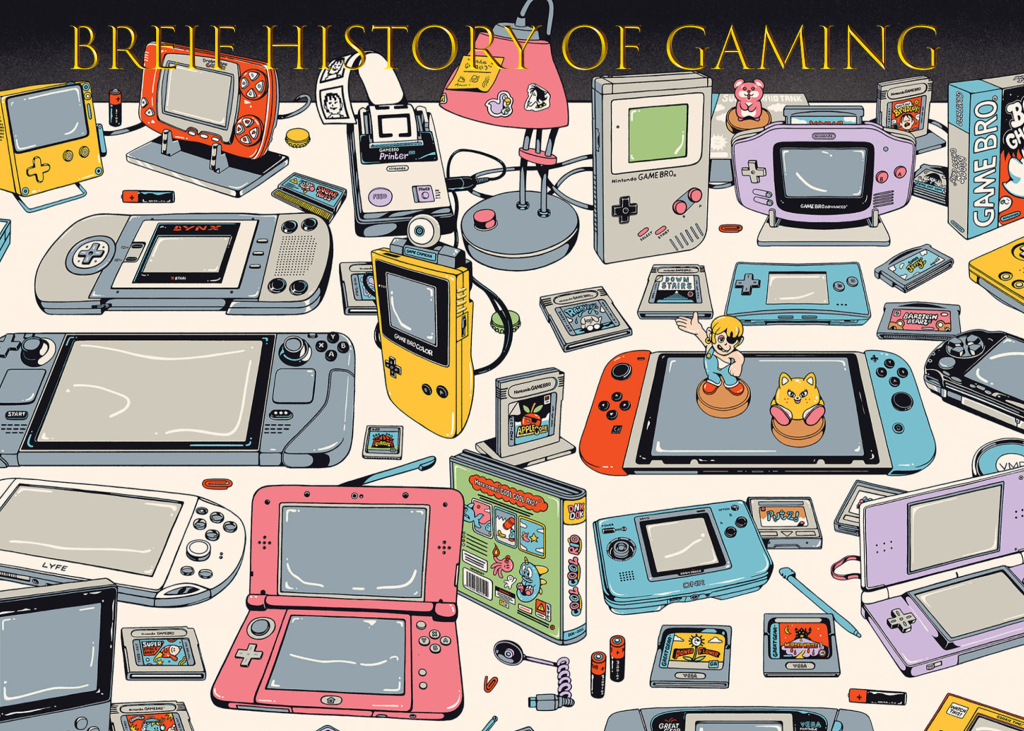
With the rise of AI and technology you would think companies will continue to push boundaries with new consoles, but that just doesn’t seem to be the case.
Let’s us see some history what made the console market to what it is today.
The Beginning
Dr. William Higinbotham is sited as the pioneer of the gaming industry by making one particular game called “Tennis for Two” back in 1958. The game was displayed in a 5 inch oscilloscope screen that uses a knob to control the angle of the ball. It’s often sited as the precursor to the game many people would know to be call Pong.

In 1972, Ralph Baer who was an German born American inventor designed the Brown Box that would become known as the Magnavox Odyssey in 1972. The Odyssey is known as the first major home console that costed $99.95, which in today’s term is $750. The console along with its successor had a total of 28 games made for it and is the start of the first generation of gaming.
The Golden Age of Arcades and Atari
During the 70s and 80s, arcade games were becoming increasingly popular. Many new arcade games were being made every year with games like Pong, Pac-Man, Donkey Kong, Space Invaders, Missile Command, Frogger, Pole Position, Q*bert, Tron, Galaxian, Asteroid, Defender and much more. Some of these had cartoon spinoffs that were often use for people to buy toys. During the late 70s and early 80s, Atari also had a console name the Atari 2600.
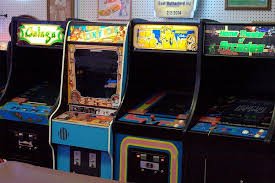
Atari was able to use this console to port many arcade classic like Breakout and Night Driver. By 1982, the console dominated the market however, due to the market being new and having poor quality ports to their console like Pac-Man, the market was heading into a decline. Many games were becoming clones of other games that were already created and with the release of the infamous E.T game, the market crashed in 1983.
This ended Atari dominance in the gaming market and to many was probably the end for video games as a whole until one company save it completely. Nintendo.
The Rise of Nintendo
The Nintendo Entertainment System (Famicom in Japan) launched in 1985 in America (1983 in Japan as Famicom) marked the recovery of the gaming market. Atari gave too much freedom to third party developer that many of the games released in the early 80s were in poor quality and were often rushed into the market. Nintendo enforced strict guidelines for their licensing standards that forced third party developer to make high quality games for the console.
The NES gave way to some games that we see today like Super Mario Bros, Metroid, The Legend of Zelda, Duck Hunt, Mega Man, Final Fantasy, Punch-Out and many more. By patenting their games, Nintendo was able to get most of the shares in the gaming market often times being 90 percent. Nintendo was getting big and by the late 80s, whenever someone talks about video games, they’re talking about Nintendo. But, there was a company that wanted to challenge them in the market that would lead up to a great rivalry between the two, that company would be Sega.

The Rise of Gaming Consoles and Sega
By the late 80s and early 90s console gaming was becoming huge with the graphical development of 8-bit going into 16 bit. Developers were beginning to master 2D gaming allowing many people to buy consoles. The arcade scene was still strong as well due to the release of Street Fighter 2 and Mortal Kombat, which was responsible for creating the rating system that we have today.
Now as stated by the late 80s and early 90s Nintendo dominated the gaming market by 90 percent and were creating their 16 bit console called the Super Nintendo Entertainment System (SNES). The system was a successor to the NES with far more advance graphics and had the use of the FX sound chip creating rich sound. It also push boundaries by using Mode 7 graphic technology allowing the background layers to rotated in different depths.
However, with the release of the SNES came a challenge, Sega in the late 80s had the Sega Master System, which was an 8-bit console release in 1985. Due to Nintendo having huge shares in the video game market, the Sega Master System failed to compete with Nintendo however, it did do well in other markets around the world like South Korea, New Zealand and Europe.
Sega wanted to compete with Nintendo during the next challenge of gaming and they came up with fantastic marketing to rival Nintendo. The console would become known as the Sega Genesis and Sega would advertise it as a console for teens that is far more cooler than Nintendo. Sonic the Hedgehog was created to be more cooler, faster and better than Mario and although Nintendo had censorship for some violent games at the time, Sega proved that arcade ports of games does not have to be censor.
By 1993, Sega and Nintendo were head to head with each other sparking the console wars that we know today. Genesis Does what Nintendon’t!! By 1994, Sega claimed 55 percent of the video game shares, but Nintendo managed to pull through with the release of Donkey Kong Country.
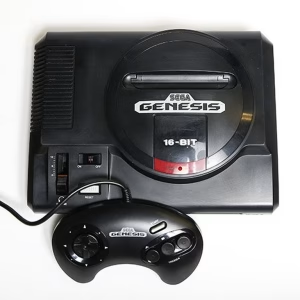
By the mid 90s, the SNES and the Genesis were at their peak. However, gaming was started to change in a big way again through graphical leaps and that would be the rise of 3D gaming.
The Rise of 3D gaming, Decline in Arcades, Fall of Sega and Birth of PlayStation
By the mid 90s gaming was starting to change, gaming companies wanted to push the boundaries even more by enchanting the experience of the graphic. Sega already created the Sega 32X, which was a Sega Genesis add on that created a 32 bit gaming experience. However, the console was rushed to the market leaving many gaming developer skeptical about putting games on it due to the announcement of the Sega Saturn in the same year.
Nintendo wanted to put an add on to the SNES called the Nintendo PlayStation. The add on would allow the SNES to play CD base games using Sony technology however, due to it having Sony parts, Sony wanted the controlling license for CD version of the Nintendo games causing a bit of a argument between Nintendo and Sony.
In the end, Nintendo decided to partner with Phillips without Sony’s knowledge causing a bit of an uproar. This caused Sony to make their own console to combat Nintendo and that console would known as the PlayStation, which is a CD base console that took most of the third party support from Nintendo due to it being CD base. Nintendo created the Nintendo 64 being a 64 bit console however, due to it being a cartridge base console, it didn’t have much games on it like the PlayStation.
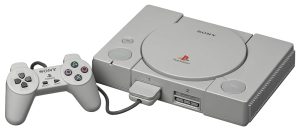
Sega would struggle to maintain success as the transition to 3D proved to be hard for the company to adapt to and with several add on, Sega was going into massive deft. Arcades were declining in popularity toward the late 90s as parents were buying their kids home console to play on.
The Golden Age of PlayStation, Rise of the Xbox and Online gaming
Sega’s last console was the Dreamcast that at launch proved to be a fantastic start however, by 2000 Sony released the PlayStation 2, which could play DVDs causing Sega to lose sales on its console and move away from the console race. Nintendo was struggling to compete with the PlayStation as it now holds lots of third party support and has lots of games to chose from. Nintendo released the Gamecube back in 2001 and while it does have great games like Super Smash Bros Melee. Super Mario Sunshine, Luigi Mansion, F-Zero GX and more, it just couldn’t keep up with the PlayStation in terms of sales and gaming library.
As Sega exit the console race, Microsoft joined in to create a console. This console would be known as the Xbox, which would launch the acclaim series Halo. The console was advertised as an American base console and as such, it did very well in the North American region however, it sold lower than expectations in Japan.
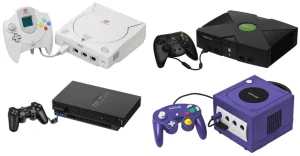
Online gaming has been around for a long period of time, however by the time we get to the 90s and 2000s it started to take off. The game Doom uses LAN to connect players to battle each other. Later, games like Ultima Online and EverQuest expanded the MMO genre. The Sega Dreamcast was the first console that had a built in modem. This allowed player to connect to the internet to play games like Phantasy Star Online with global multiplayer experiences. However, in the 2000s the game World of Warcraft took the online gaming world by storm and became a cultural phenomenon reaching 12 million subscribers in 2010.
Focus on Online Social Media Apps
By the late 2000s, Social media started to gain more traction in the gaming scene and Nintendo was started to shift away from focusing on console graphic. Nintendo wanted to focus on the console inability to become innovative. This is when the Wii came into play with as instead of playing the console normally, how can people play the console differently than its competitor.
Sony and Microsoft started to focus more on adding online streaming content rather focusing on pushing boundaries. App games started to become the norm in the 2010s as many people started playing on their phone, these games include Candy Crush, Pokemon Go, Farmville, Temple Run, Angry Bird, Flappy Bird and much more.

Although some of these games have lost in popularity, at the time they gain a lot of attention. Most consoles now focuses on the ability to add streaming software and constant updates slowing the console performance. However, the gaming industry still makes fantastic games today with more indie games being included, but there doesn’t seem to be a significant leap in technology for gaming.
So that leaves the question. Do we need new consoles. What do you think?
Feature Image: [Image: courtesy Harper Collins]
https://www.history.com/articles/history-of-video-games